
 Every Mechanism
Home How a Piano Works
Every Mechanism
Home How a Piano Works
Press a key and a felt hammer flies up, strikes the strings and falls away again, all in a few hundredths of a second. Behind every key is a small machine of levers, felts and springs. Here is a grand piano, cut open.
Video
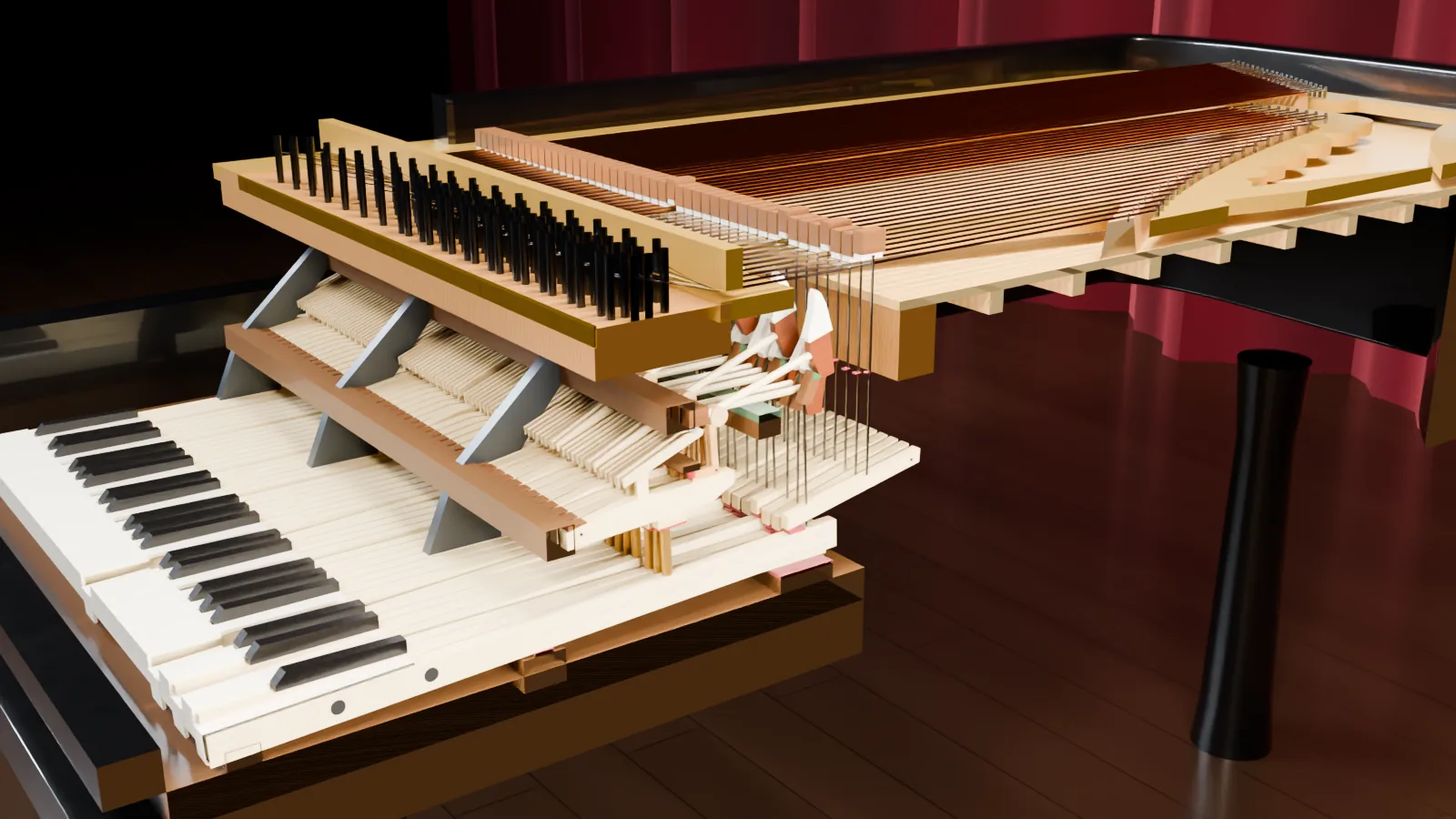
A grand piano sawn open beside G4, so you can see the action behind every key. Play the keys under the model, or click a key on the piano itself, and watch its hammer fly to the strings. Slow it right down, press the pedals, drag to turn the view and scroll to zoom.
The piano sawn open beside G4, so every layer shows: the black case; the gold iron plate with the strings stretched over it; the soundboard underneath; the keys, their action and the hammers in front; the dampers resting on the strings; and the pedals below. Tap any part, or pick a name.

Hover or tap the picture. Amber rings mark every part.
Middle C’s key and action, seen from the side with everything in front of it cut away. The numbers follow the push of your finger: the key, the parts that lift the hammer and let it go, the hammer and its strings, the parts that catch it, and the damper.
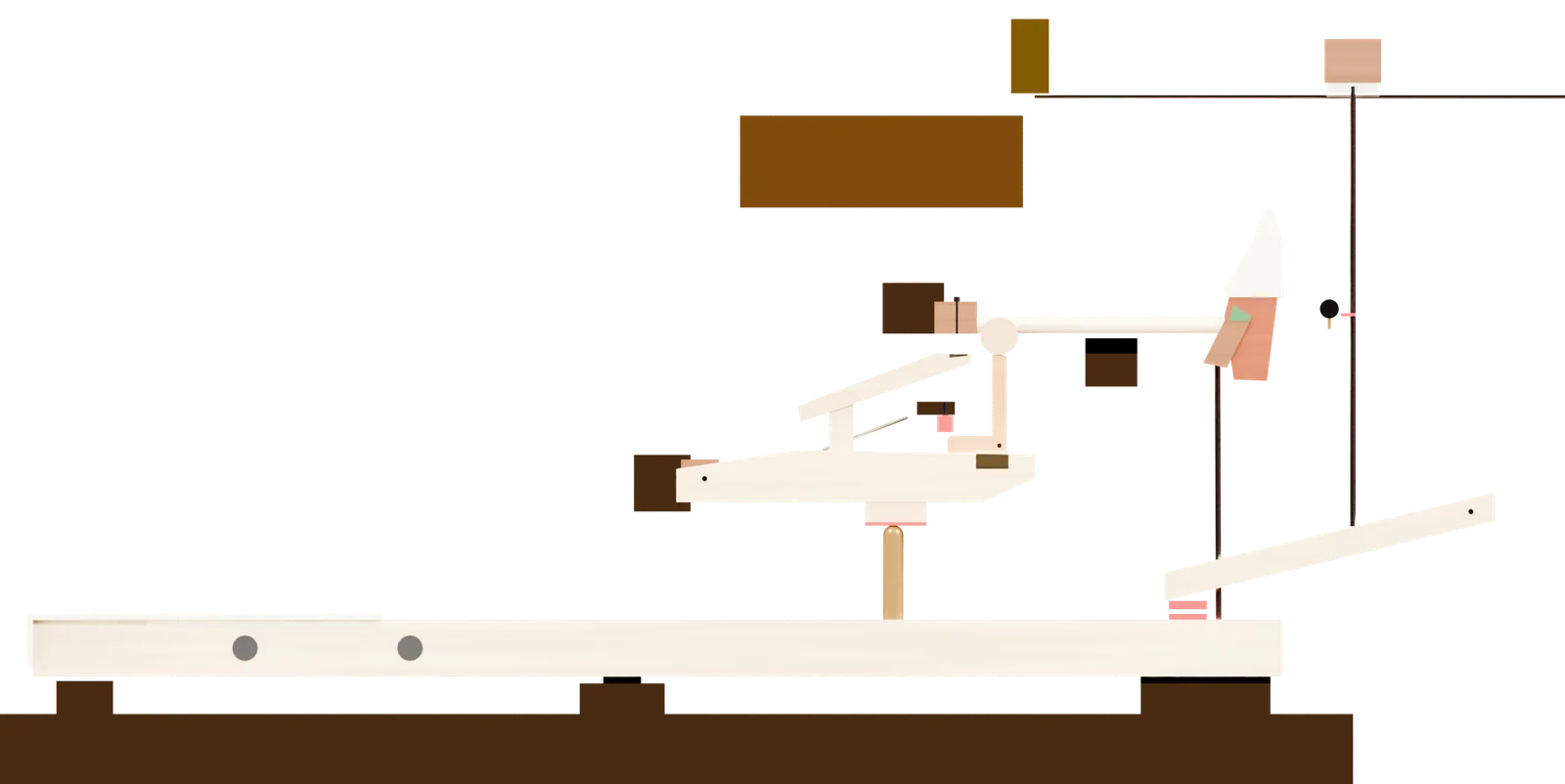
At rest: the hammer lies on its rest rail, the jack stands under the knuckle, and the damper sits on the strings.
The same steps as the video. Each picture is a moment from it; press Show me in 3D to set the model up for that step.

Press middle C in slow motion. The jack lifts the hammer, trips on the let-off button and slips away, so the hammer flies the last two millimetres on its own. It bounces off the strings and the backcheck catches it.
The hammer has to be free when it hits: still pushed against the strings, it would stop them at once. Press very slowly and it never gets there at all. Let the key up only half way and press again: the repetition lever holds the hammer up so the jack can slide back under it, and the note can be played again quickly.
A string’s note depends on how long it is, how heavy it is and how hard it is pulled. Halve its length and the note goes up an octave; make it heavier and the note goes down; pull it harder and the note goes up. Then bring an out-of-tune string into tune with its two partners, as a tuner does.
Play the keys and watch the dampers. A key lifts only its own damper; let go and the damper drops and stops the note. Then try each pedal.
A string on its own is nearly silent: it is so thin that the air just slips round it. The bridge passes its vibration into the big spruce soundboard, which pushes a broad sheet of air to and fro. Strike the same string with and without the board.