
 Every Mechanism
Home How a Differential Works
Every Mechanism
Home How a Differential Works
Round a corner, the outer wheel has farther to go than the inner one. The differential lets one engine drive both wheels while each turns at its own speed.
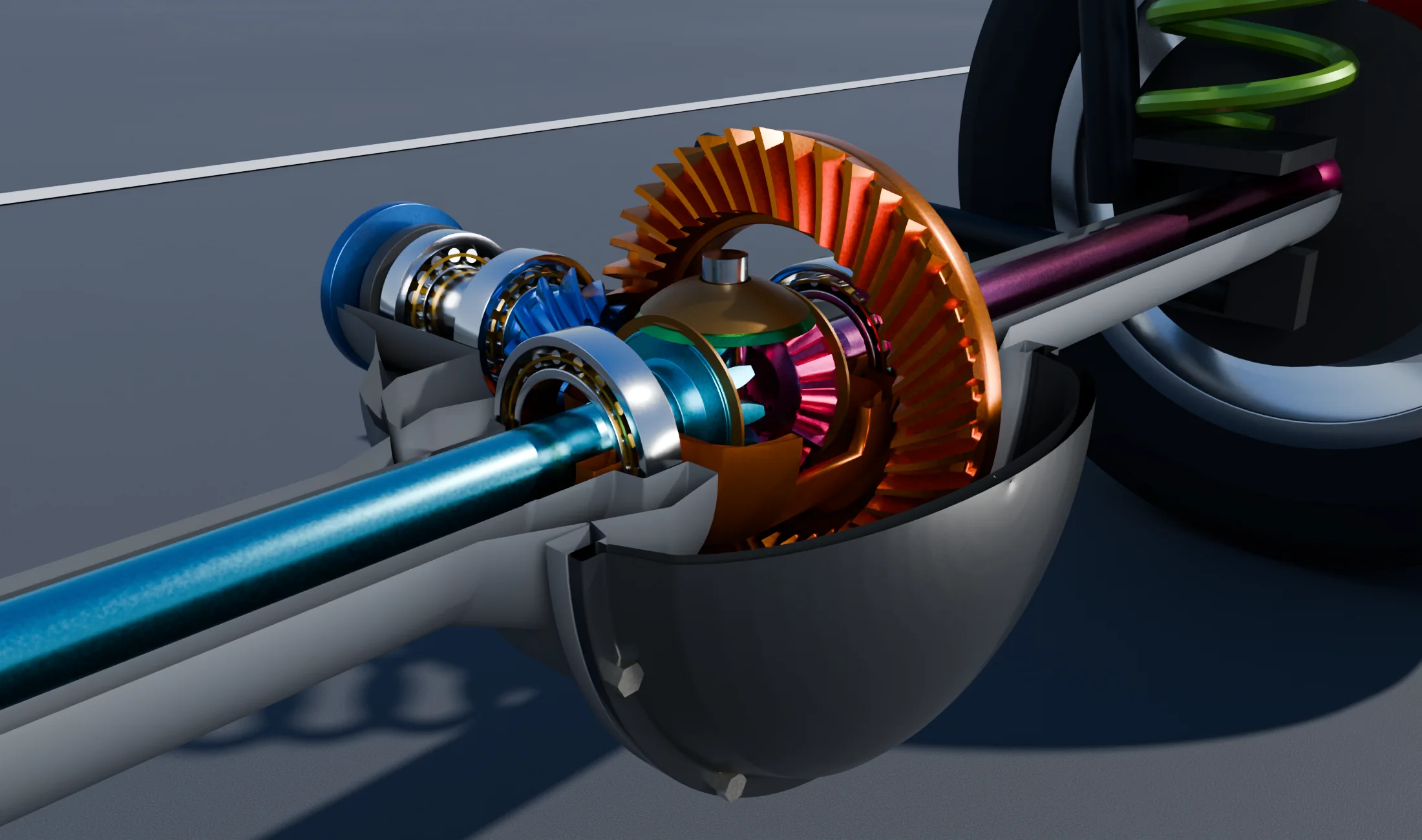
Video
It’s already cut open. Press Drive, steer into a corner and watch the green spider gears start to spin. Drag to look around; scroll or pinch to zoom.
Keep scrolling: the housing is sawn in half, then the gears inside the carrier slide apart.
Tap any part of the opened axle or pick a name below. The final drive turns the power through the corner, the differential shares it out, and the axle carries it to the wheels.

Hover or tap the picture. The dots mark every part.
Numbers 1 to 8 follow the power from the driveshaft to the wheels. Numbers 9 to 15 hold everything in place and keep the oil in.

One idea at a time, from why the wheels must turn at different speeds to cars with three differentials. Every step has a button that sets up the 3D model to show it.
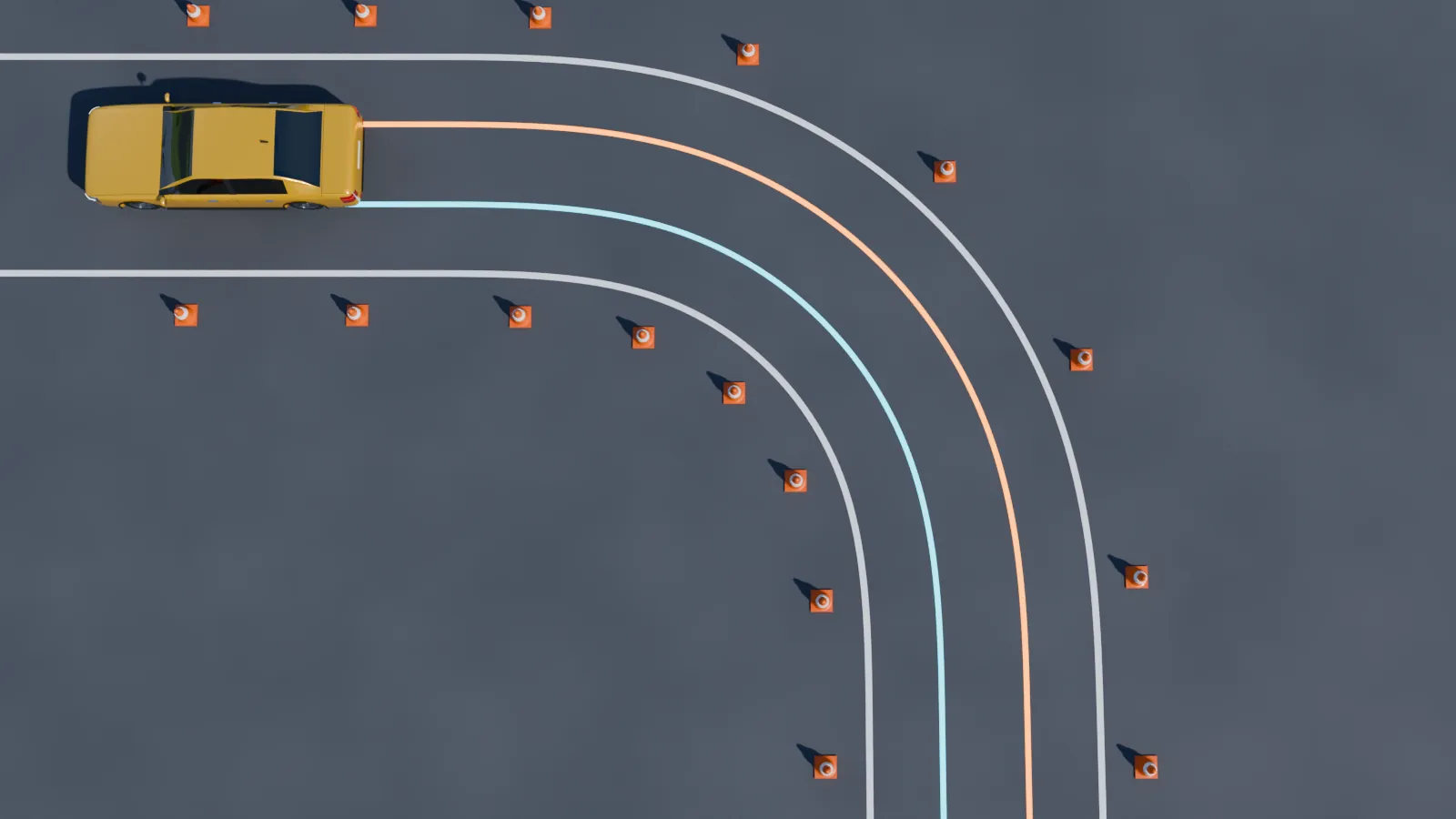
In a turn each rear wheel runs round its own circle. The outer circle is bigger, so the outer wheel must turn faster, by exactly as much as the inner one turns slower.
Steer, then swap the differential for a solid axle. With both wheels forced to turn at the same speed, the tyres have to scrub across the road.
Three cars wait with the right rear wheel on ice. Each needs a push of about 200 Nm at its rear wheels to get going. Open the throttle and watch what each kind of differential does.
The spider gears push equally on both side gears, so an open differential can only give the gripping wheel as much as the icy one can take: about 60 Nm.

In a turn the front wheels run round bigger circles than the rear ones, so the front axle as a whole has to turn faster too. A centre differential lets it.
Lock the centre differential on a dry road and steer: the front and rear driveshafts are forced to the same speed, the driveline winds up like a spring, and a tyre has to give.
